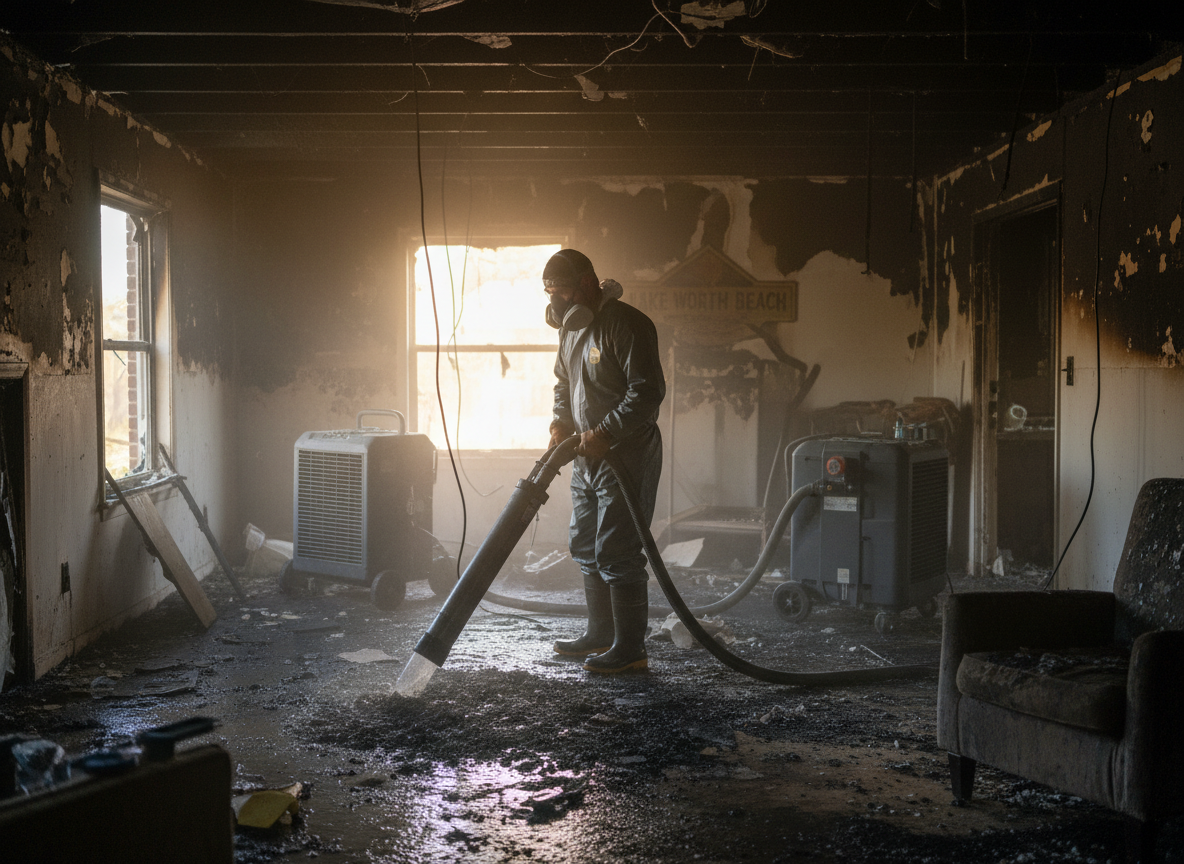
Firefighting water in Lake Worth Beach homes often saturates older plaster walls and hardwood floors common in Downtown Lake Worth and South Palm Park properties built before 1970. Residual moisture combines with soot to create acidic conditions that corrode metal fixtures and promote hidden mold growth, especially during the area's hot humid summers. Technicians must map moisture behind lathe-and-plaster assemblies using thermal imaging before demolition to avoid spreading contaminants into Lake Worth Shores crawl spaces.
Palm Beach County building codes require removal of all water-affected insulation and drywall within 48 hours when smoke residues are present. In Lake Worth Beach, the sandy soil and high water table mean slab leaks from fire hoses can migrate under foundations toward nearby Lake Worth Beach properties, creating secondary damage weeks later. Proper negative-air containment prevents soot particles from traveling through shared walls in multi-unit buildings near the Lake Worth Casino Building.
Drying equipment must account for the tropical rainforest climate where relative humidity routinely exceeds 80 percent. Dehumidifiers sized for the square footage of typical 1920s-1950s bungalows in Lantana Road corridors prevent warping of original millwork while extracting water from beneath tile in bathrooms and kitchens. Odor neutralization follows only after moisture readings drop below 12 percent to avoid sealing in smoke smells.
Technician insight
In Lake Worth Beach, the thing that catches most people out with water damage remediation after fire is how quickly the tropical humidity re-wets plaster and lathe in 1950s homes near Downtown Lake Worth once the AC is off during the job.
Kitchen fire response in Lake Worth Shores
A kitchen fire in a Lake Worth Shores bungalow sent water through the floor into the crawl space. Crews found standing water under the original hardwood and soot embedded in insulation. Extraction and targeted drying prevented mold while preserving the 1960s millwork, allowing the owner to return within ten days.
How it works
- 1
Initial Assessment
Technicians inspect all affected rooms, document water migration paths through older Lake Worth Beach construction, and test for hidden moisture in attics and under floors.
- 2
Water Extraction
High-volume pumps and wands remove standing water from carpets, hardwood, and slab surfaces before humidity in Palm Beach County drives secondary saturation.
- 3
Structural Drying
Air movers and commercial dehumidifiers run continuously while monitoring moisture levels in walls and subfloors typical of South Palm Park homes.
- 4
Smoke Residue Cleaning
HEPA filtration and specialized cleaners remove acidic soot from surfaces after drying is verified to prevent corrosion in metal and wood elements.
Pricing
Upfront quotes provided after on-site inspection; final cost depends on square footage affected, depth of water penetration, and number of rooms requiring containment.