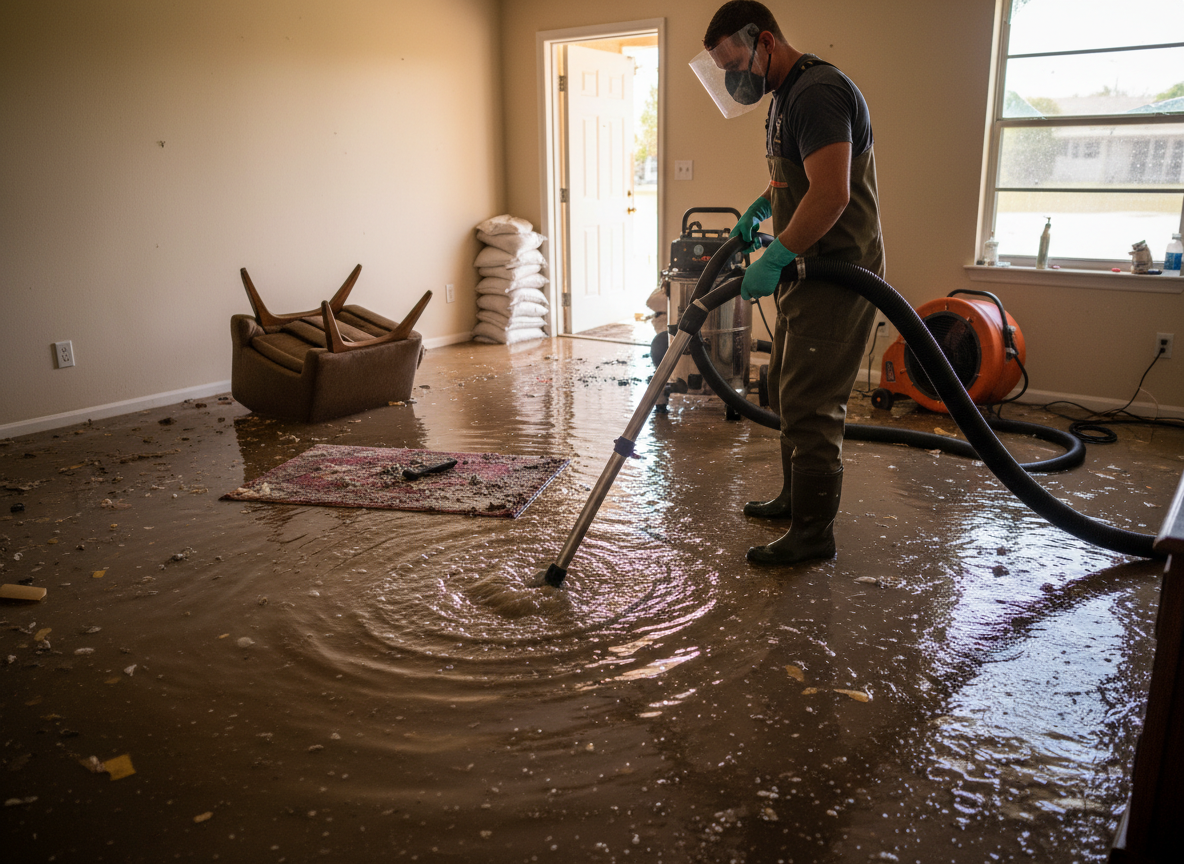
Lake Worth Beach sits in a tropical rainforest climate where hot humid summers keep moisture in the air long after the rain stops. Older wood-frame houses in Downtown and South Palm Park absorb water into plaster and subfloors faster than newer builds, so extraction must begin before humidity drives hidden saturation deeper into walls. Crews at 102 N Federal Hwy keep truck-mounted extractors and air movers ready around the clock because afternoon thunderstorms can dump several inches in an hour and send water under slab foundations common along Federal Highway.
When a main line bursts near Lake Worth Shores, water often travels under the slab and into neighboring yards because the sandy soil drains slowly. Technicians cut strategic channels in wet drywall rather than tearing entire rooms, then place dehumidifiers sized for the square footage while monitoring moisture meters in the concrete. This targeted approach prevents unnecessary demolition in the tightly spaced 1950s and 1960s homes that line the side streets off Lake Worth Beach.
Palm Beach County building codes require proper drying documentation before any reconstruction can start. Leaving standing water even a few hours in high humidity allows microbial growth on organic materials inside cabinets and under vinyl flooring. The team documents every reading and removes water until readings match unaffected areas, which protects homeowners when filing claims with insurers familiar with Lantana and West Palm Beach properties.
Technician insight
In Lake Worth Beach, the thing that catches most people out with Emergency water removal is how quickly humidity from our tropical summers re-wets wood framing in the older Downtown homes once you stop the fans. A slab leak in South Palm Park can travel under the foundation and resurface in the yard because the sandy soil holds moisture; if you only pull the carpet you miss the joists.
Washing machine overflow in Lake Worth Shores
Water from a failed supply line spread across the laundry room and into the adjacent hallway of a 1960s single-story home. Extraction crews removed standing water the same afternoon, then ran drying equipment for three days while checking readings behind the base cabinets. The homeowner avoided mold growth and kept the original oak floors intact.
How it works
- 1
On-site assessment
Technicians arrive within the hour, locate the water source, and measure moisture levels in floors, walls, and cabinets across the affected rooms.
- 2
Water extraction
Truck-mounted pumps and wands pull standing water from carpets, tile, and hardwood while protecting unaffected areas with plastic barriers.
- 3
Drying and monitoring
Air movers and dehumidifiers run continuously; daily moisture readings track progress until drywall and subfloors reach dry standard.
- 4
Final walkthrough
Homeowner reviews every room with the crew, confirming all wet materials have been addressed before equipment is removed.
Pricing
Pricing varies by volume of water, number of affected rooms, and required drying time; an on-site assessment is provided before work begins.