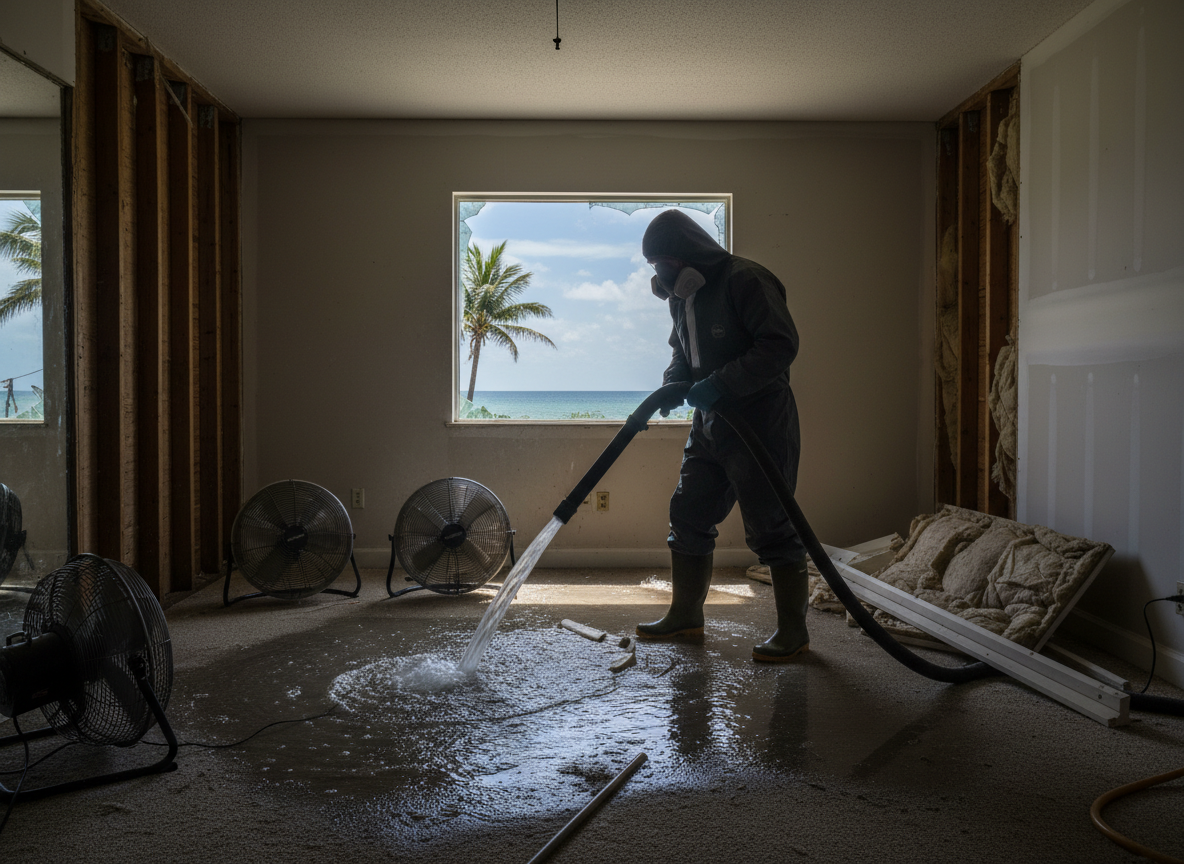
Lake Worth Beach homes built before 1970 in Downtown and South Palm Park often have galvanized pipes and slab foundations that hide leaks until water reaches baseboards or carpet. Tropical rainforest humidity accelerates mold on drywall and wood framing once moisture exceeds 60 percent, so technicians must pull affected base plates and run dehumidifiers sized for the square footage rather than relying on fans alone.
Leaks near the Lake Worth Casino Building or Lake Worth Shores frequently involve irrigation lines or roof penetrations that saturate stucco walls from the inside out. Extraction starts with moisture meters mapped on a grid so crews know exactly which sections of lath and plaster must be removed before drying begins, preventing hidden pockets that later cause ceiling failures during summer storms.
Palm Beach County code requires permits for any structural drying that affects load-bearing elements, and older Lake Worth Beach properties in flood zones need documentation of all removed materials to satisfy insurance adjusters. Crews document every step with photos and meter readings because the high water table means groundwater can re-enter slabs if perimeter drains are not cleared during the job.
After extraction, air movers and commercial dehumidifiers run continuously until wood moisture content drops below 12 percent, a threshold that takes longer here than in drier inland counties because ambient humidity stays elevated even at night.
Technician insight
In Lake Worth Beach, the thing that catches most people out with Water leak restoration is how fast mold takes hold once humidity spikes in our tropical summers; a small pinhole leak behind stucco in a 1950s South Palm Park house can spread through the wall cavity in under 48 hours because the high water table keeps the slab damp.
Hidden Slab Leak in Lake Worth Shores
A homeowner noticed buckling tile near the kitchen in a Lake Worth Shores property. Inspection found a slab leak from aged copper lines feeding the ice maker. Crews removed the compromised section of flooring, extracted water, and ran drying equipment for five days until readings returned to normal, allowing the owner to reinstall tile without further mold issues.
How it works
- 1
Initial Assessment
Technician arrives within hours, maps moisture with meters, and identifies the leak source in the specific neighborhood.
- 2
Water Extraction
Remove standing water and saturated materials from floors, walls, and cavities using truck-mounted equipment.
- 3
Drying and Dehumidification
Place commercial air movers and dehumidifiers, monitor daily until moisture levels stabilize.
- 4
Sanitization and Restoration
Apply antimicrobial treatments where needed and coordinate with contractors for repairs.
Pricing
Cost depends on square footage affected, depth of saturation, and whether structural materials must be removed.