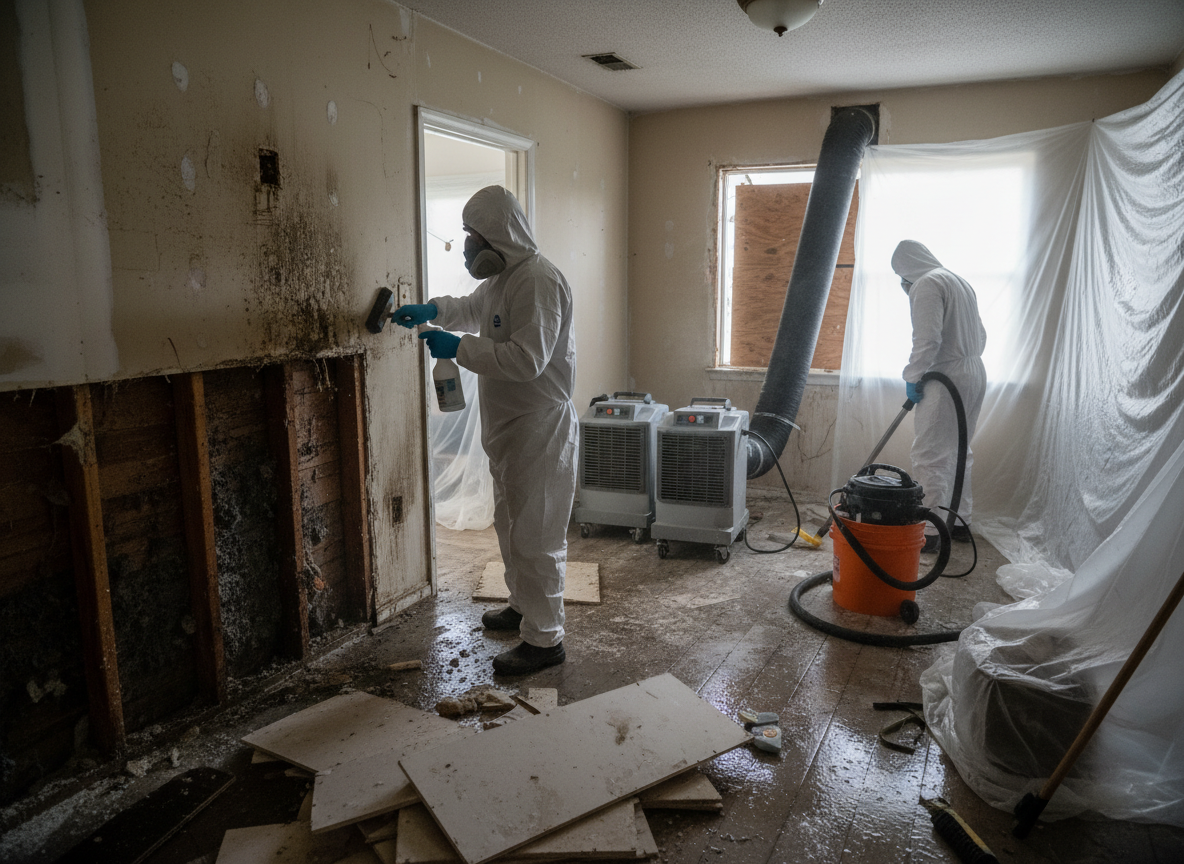
In Lake Worth Beach the combination of a tropical rainforest climate and older housing stock around Downtown and Lake Worth Shores means water intrusion quickly turns into hidden mold colonies behind plaster and lath walls. After any leak or flood, moisture travels through the porous limestone foundations common here and sits against framing for weeks before odors appear. Technicians must pull baseboards, use moisture meters on every stud, and run negative-air machines long enough to drop interior humidity below 50 percent or the mold returns within a single humid summer night.
Containment is tighter than in drier counties because spores travel easily on the constant sea breeze that moves through open windows in South Palm Park bungalows. We seal off rooms with 6-mil poly and HEPA scrubbers before any demolition, then bag and remove saturated drywall and insulation rather than trying to dry it in place. Antimicrobial rinses are applied only after visible growth is gone; otherwise the product simply seals active colonies that later push through new paint.
Air sampling before and after work is standard because Palm Beach County health inspectors sometimes request documentation when a property changes hands. Homeowners in Lantana and West Palm Beach who skip this step often discover during resale that buyers’ inspectors flag elevated spore counts even after cosmetic repairs. Final clearance includes a written report showing post-remediation levels match outdoor baselines taken the same day.
Edge cases include mold in the Lake Worth Casino Building area crawl spaces where salt air corrodes metal straps and keeps wood damp year-round. These jobs require extra dehumidification days and sometimes temporary power to run equipment overnight without tripping old electrical panels.
Technician insight
In Lake Worth Beach, the thing that catches most people out with Mold remediation after water damage is how fast our hot humid summers push growth through plaster in 1950s homes around Downtown and Lake Worth Shores; if you only treat the visible spot without pulling baseboards and checking the stud bays, it returns the first time the AC struggles during a July rain.
Crawl-space mold after roof leak
A Lake Worth Shores homeowner noticed musty air after summer storms. Inspection found standing water under the 1960s home that had wicked into floor joists. We contained the space, removed saturated insulation, dried the framing for four days, and treated all exposed wood. Follow-up samples showed spore levels matched outdoor air from Lake Worth Beach.
How it works
- 1
Initial Assessment
Technician arrives within hours, maps moisture with meters, identifies all affected materials, and sets up containment.
- 2
Containment and Removal
Rooms are sealed, damaged drywall and insulation are cut out and bagged, and visible mold is physically removed.
- 3
Drying and Antimicrobial Application
Industrial dehumidifiers and air movers run until wood moisture drops below 12 percent, then EPA-registered antimicrobials are applied to remaining surfaces.
- 4
Clearance Testing
Air samples are taken inside and outside; written report is provided once levels match outdoor baselines.
Pricing
Cost depends on square footage affected, number of rooms, and whether hidden growth is found behind walls; upfront quotes are provided after inspection.