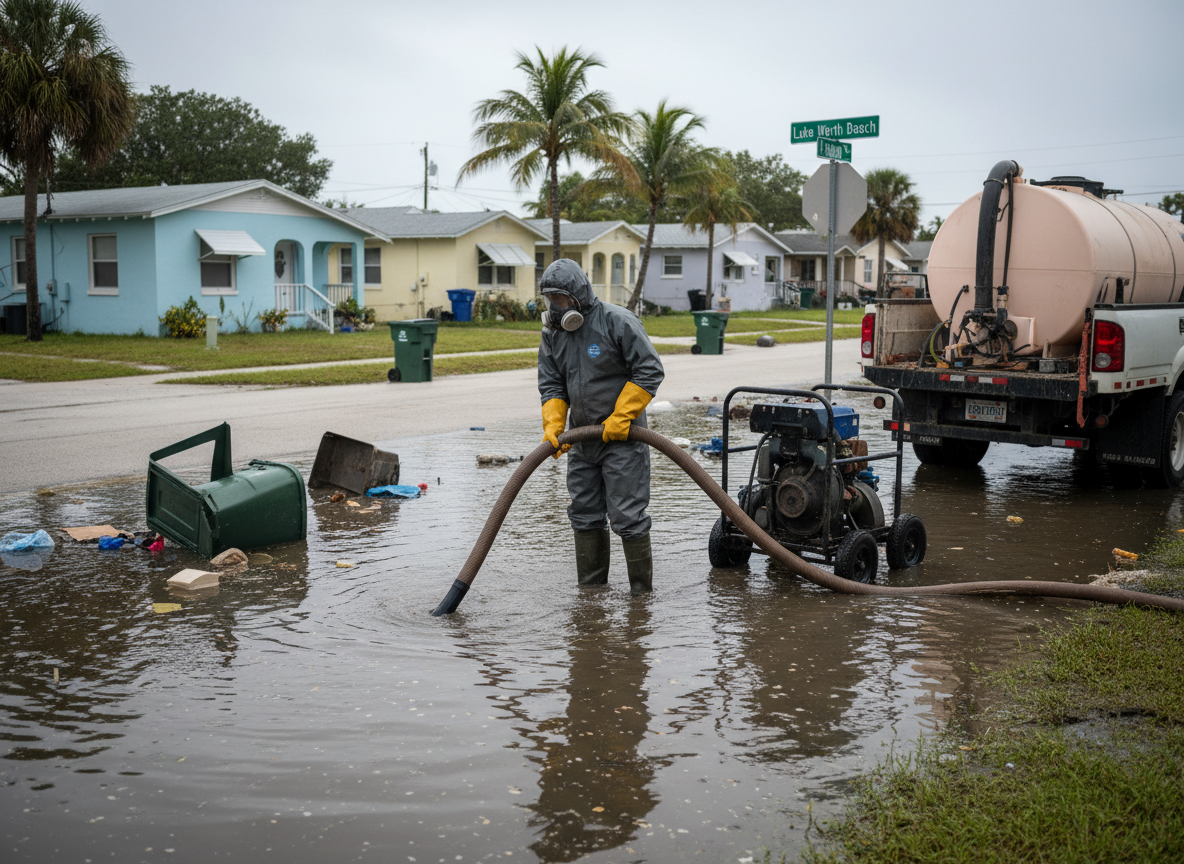
Sewage backups in Lake Worth Beach often stem from aging clay pipes common in homes built before 1970 around Downtown Lake Worth and South Palm Park. Heavy summer rains in Palm Beach County's tropical climate push groundwater into these lines, forcing contaminated water through floor drains and toilets. Crews must first isolate the source, then remove standing effluent before it migrates into wall cavities or under slab foundations where high humidity slows evaporation and encourages mold within 24 hours.
Properties near Lake Worth Beach and the Lake Worth Casino Building sit on low-lying terrain that collects runoff from Lantana and West Palm Beach streets during tropical downpours. Technicians use moisture meters on concrete slabs and behind baseboards to locate hidden saturation that standard fans cannot reach. Contaminated carpet padding and drywall must be cut out to EPA Category 3 standards, with antimicrobial application followed by dehumidification to bring indoor humidity below 50 percent before reconstruction begins.
West Palm Beach and Lantana customers frequently report sewage entering through exterior cleanouts after Palm Beach County sewer main surcharges. In these cases, extraction equipment is staged on the street to avoid tracking waste through living spaces, and all porous materials within the affected footprint are documented and removed. Final clearance testing confirms zero detectable pathogens before homeowners return.
Technician insight
In Lake Worth Beach, the thing that catches most people out with sewage cleanup is how the tropical humidity and older clay sewer lines in South Palm Park keep moisture trapped under slabs long after the visible water is gone. Homeowners often try to dry it themselves with box fans, which just spreads aerosolized contaminants through the house.
Downtown Lake Worth Backup After Heavy Rain
A homeowner in Downtown Lake Worth noticed sewage rising through a bathroom floor drain after an afternoon storm. We found the main line blocked by roots common in the neighborhood's older infrastructure and discovered water had wicked into the hallway subfloor. Extraction and targeted demolition removed the risk before mold could form in the humid conditions, allowing the family to stay in the unaffected portion of the home.
How it works
- 1
Arrival and Containment
Technicians arrive within the hour, set up containment barriers, and shut off water to prevent further flow through the property.
- 2
Extraction and Removal
Standing sewage is pumped out, followed by removal of saturated carpet, padding, and drywall sections to stop cross-contamination.
- 3
Cleaning and Disinfection
All hard surfaces receive EPA-registered disinfectants, with attention to subfloor seams and plumbing penetrations common in older Lake Worth Beach homes.
- 4
Drying and Monitoring
Commercial dehumidifiers and air movers run until moisture readings match unaffected areas, typically 48-72 hours in Palm Beach humidity.
- 5
Final Clearance
Independent testing verifies safe conditions before any reconstruction or occupant re-entry.
Pricing
Pricing depends on square footage affected, depth of contamination, and whether slab or wall cavities require demolition; upfront quotes provided after on-site assessment.