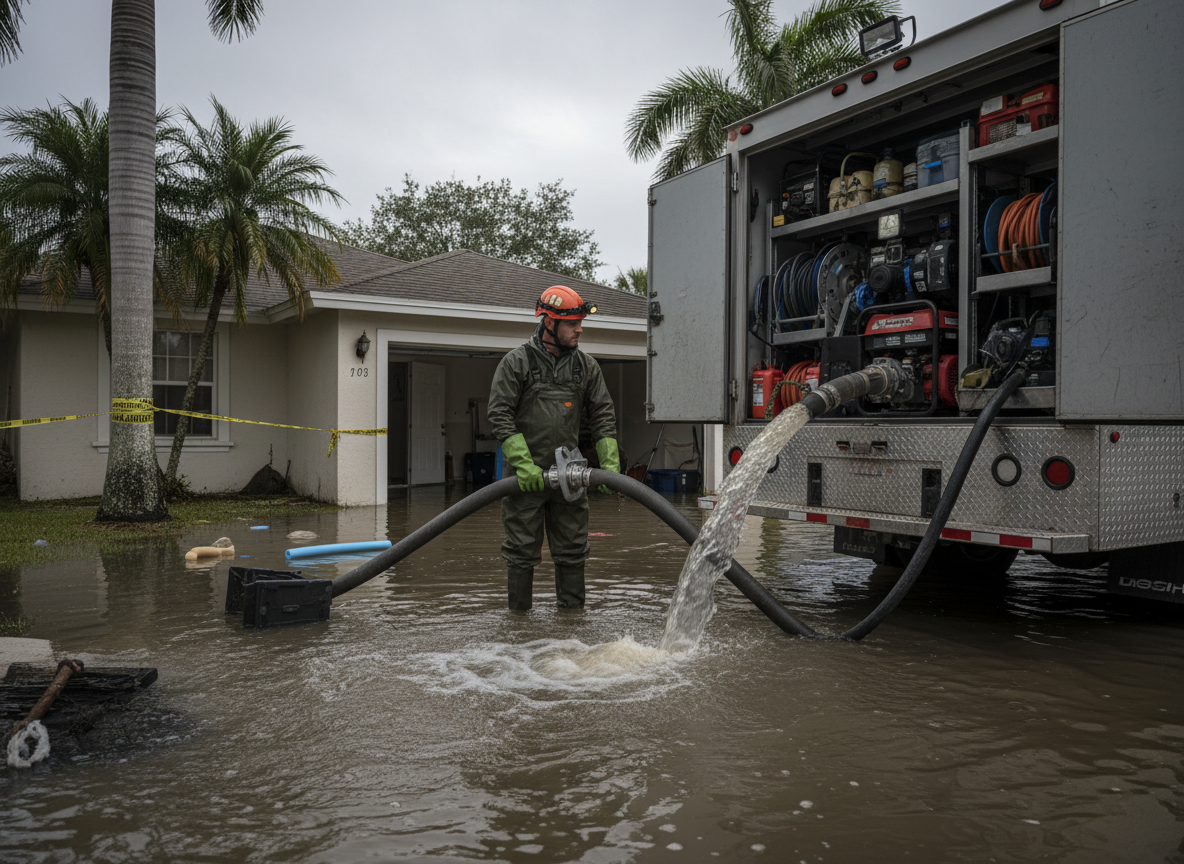
Rapid water extraction in Lake Worth Beach begins with truck-mounted pumps that pull standing water from slabs and crawl spaces common in South Palm Park and Lake Worth Shores homes built before modern moisture barriers. Hot humid summers push relative humidity above 80 percent most afternoons, so crews use moisture meters on drywall and subfloors within minutes of arrival to locate hidden pockets that would otherwise feed mold growth along the Intracoastal. Properties near the Lake Worth Casino Building often sit on older fill that drains slowly, requiring angled extraction wands and repeated passes to prevent water from wicking back under tile.
Technicians working 24/7 from 102 N Federal Hwy know that Lantana and West Palm Beach storm runoff can push saltwater into Lake Worth Beach foundations, raising the risk of corrosion on metal lath and electrical boxes inside Downtown cottages. Extraction stops once readings drop below 15 percent moisture content on wood, but crews document every step because Palm Beach County inspectors may review claims after tropical events. Leaving even thin films of water on concrete in these conditions can double drying time and force removal of baseboards that homeowners hoped to save.
Edge cases include multi-story buildings along Federal Highway where water migrates through elevator shafts or shared walls between neighboring units. Extraction here demands containment barriers and negative air to keep particulates from drifting into unaffected rooms while pumps run. The same tropical rains that soak Lake Worth Shores yards also saturate landscaping soil, so crews check exterior grades before declaring the interior dry.
Technician insight
In Lake Worth Beach, the thing that catches most people out with Rapid water extraction is how the tropical humidity keeps moisture trapped inside the older slab homes around Downtown and South Palm Park long after the visible water is gone, forcing extra extraction passes that homeowners never expect.
Burst pipe near Lake Worth Shores
A kitchen supply line failed overnight in a 1960s home off Lake Worth Shores. Standing water reached the living room slab and began migrating toward shared walls. Crews extracted 400 gallons within two hours, mapped moisture behind baseboards, and prevented mold that the summer humidity would have triggered within days.
How it works
- 1
Arrival and Safety Setup
Crew arrives within the hour, shuts off water sources, and places containment around affected zones in Lake Worth Beach homes.
- 2
Standing Water Removal
Truck-mounted extractors pull bulk water from slabs, carpets, and low areas typical of older South Palm Park foundations.
- 3
Moisture Mapping
Infrared and pin meters locate remaining dampness in walls and subfloors before humidity in Palm Beach summers allows mold.
- 4
Final Extraction Pass
Technicians re-extract any re-accumulated water and confirm readings meet drying standards for the local climate.
Pricing
Cost depends on water volume, number of affected rooms, and access in older Lake Worth Beach construction.