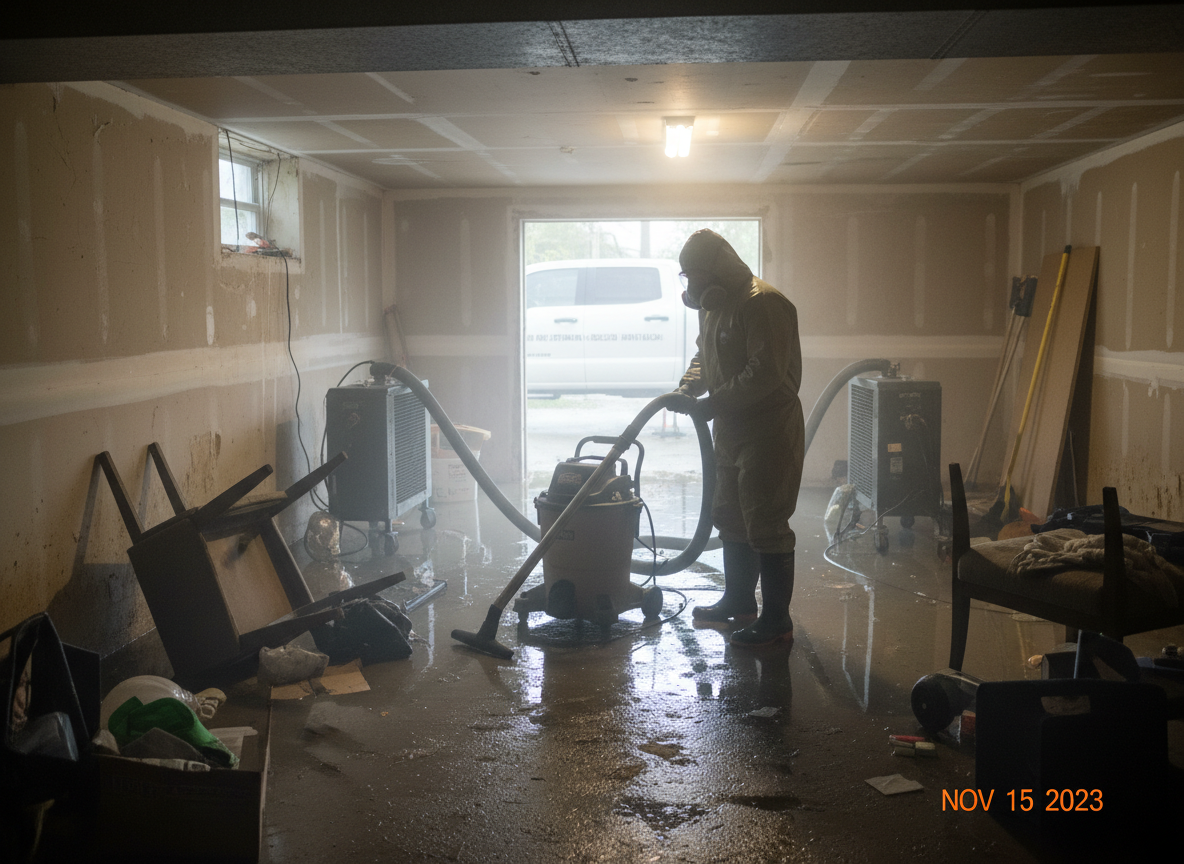
Lake Worth Beach sits on a high water table in Palm Beach County where older homes in Downtown and South Palm Park often have below-grade spaces that fill quickly during summer downpours. Extraction must begin immediately because the tropical rainforest climate keeps humidity above 80 percent for weeks, turning standing water into active mold growth within 48 hours. Technicians use truck-mounted pumps and air movers rated for coastal salt air to pull moisture from concrete block walls common in 1950s and 1960s construction before any drying or antimicrobial steps.
In Lake Worth Shores and nearby Lantana, storm surge can push saltwater into basements through utility penetrations and floor drains. Standard freshwater protocols fail here because salt crystals continue drawing moisture from the air long after visible water is gone. Crews test for chlorides, flush with fresh water, then apply corrosion inhibitors to metal beams and electrical boxes before sealing. Failure to address the salt leaves homeowners with recurring musty odors and failed finishes months later.
West Palm Beach building codes require permits for any structural drying that affects load-bearing walls, and Lake Worth Beach inspectors enforce the same rules on older Downtown properties. Skipping documentation can delay insurance claims or trigger stop-work orders. The address at 102 N Federal Hwy keeps response times under 60 minutes for these neighborhoods, allowing crews to document conditions and begin extraction before county health officials arrive on repeated complaints.
Technician insight
In Lake Worth Beach, the thing that catches most people out with Basement flood cleanup is the high water table under South Palm Park combined with our hot humid summers. Homeowners think once the pumps leave the job is done, but salt from even one tidal push keeps pulling moisture back into the slab for weeks. We always test for chlorides before we close the walls.
Downtown Lake Worth basement after summer storm
Heavy rain backed up the storm drain behind an older home near the Lake Worth Casino Building and flooded the basement with six inches of mixed rainwater and saltwater. We extracted the water the same night, flushed the slab, and ran drying equipment for nine days until moisture readings stabilized. Final clearance passed county inspection and the homeowner avoided a mold claim.
How it works
- 1
Emergency Assessment
Arrive on site, locate all water entry points from Lake Worth Beach storm drains or rising groundwater, and map affected square footage in the basement.
- 2
Water Extraction
Remove standing water with submersible pumps and wands, separating any saltwater from freshwater sources common after Palm Beach County coastal events.
- 3
Drying and Monitoring
Place commercial dehumidifiers and air movers, then check moisture levels in concrete and wood framing daily until readings match unaffected areas.
- 4
Sanitization and Clearance
Apply EPA-registered antimicrobials, remove damaged materials, and provide written clearance for insurance or local inspectors.
Pricing
Cost depends on water volume, whether saltwater is present, and square footage that must be dried; upfront written quotes provided on site.