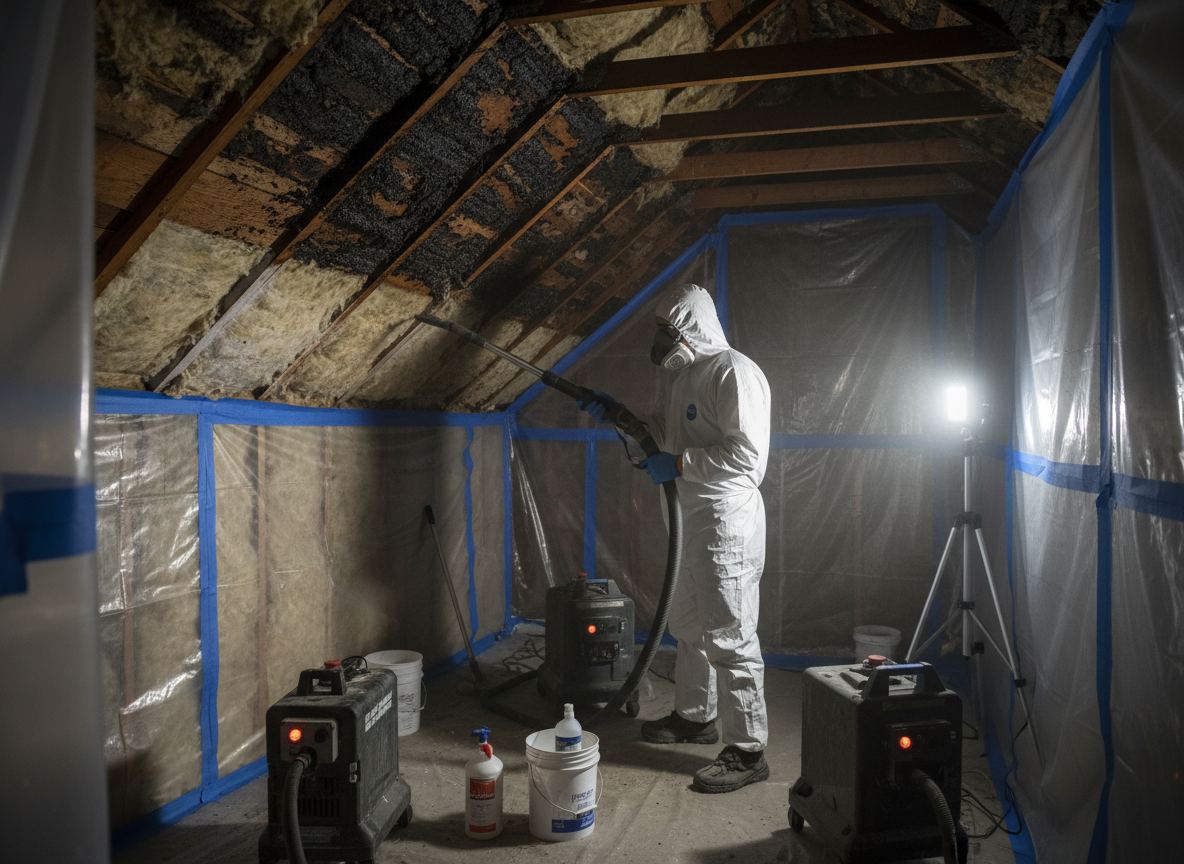
Lake Worth Beach homes in neighborhoods such as South Palm Park and Lake Worth Shores often feature older roof structures and limited attic ventilation that trap moisture during the area's hot humid summers. Attic mold typically starts from small roof leaks or condensation that goes unnoticed until it spreads across insulation and rafters. Technicians must remove affected materials while protecting living spaces below, especially in two-story homes near Downtown Lake Worth where access can be tight. Proper containment and HEPA filtration prevent spores from migrating into the rest of the house during removal.
Palm Beach County building practices in older stock around the Lake Worth Casino Building area frequently left attics without modern vapor barriers, allowing persistent humidity to fuel recurring growth even after minor water events. Remediation crews inspect for hidden saturation in wood sheathing and HVAC ducts that run through these spaces. They document moisture levels before and after work to confirm the source has been addressed. This step matters because simply cleaning visible mold without fixing ventilation or leaks leads to rapid return in the tropical climate.
Work in Lake Worth Beach attics also accounts for the sandy soil and flat terrain that can direct storm runoff toward foundations, creating secondary moisture paths into roof cavities. Crews often find mold concentrated near soffit vents clogged by salt air and debris. Removing contaminated insulation requires careful bagging and disposal to avoid cross-contamination with nearby properties in Downtown or Lantana-adjacent blocks. Final clearance testing verifies that airborne spore counts have returned to normal outdoor baselines before homeowners re-enter the space.
Technician insight
In Lake Worth Beach, the thing that catches most people out with attic mold remediation is how the constant summer humidity combined with older unvented attics in South Palm Park homes lets mold hide behind insulation even after a small roof leak stops. Homeowners often try bleach sprays that only discolor the surface while roots remain in the wood.
Hidden Growth After Roof Leak in South Palm Park
A homeowner noticed a musty odor in the upstairs hallway of a 1960s home near Lake Worth Shores. Inspection revealed water had entered through a flashing failure and traveled along rafters, saturating insulation across half the attic. Crews contained the space, removed the wet materials, dried the structure, and added ridge vent recommendations. The odor cleared and no regrowth appeared after the next rainy season.
How it works
- 1
Initial Inspection
Technicians assess attic access, moisture sources, and extent of growth using moisture meters and borescopes while documenting conditions in homes throughout Lake Worth Beach.
- 2
Containment Setup
Plastic barriers and negative air machines isolate the attic to keep spores from entering living areas in neighborhoods like South Palm Park.
- 3
Material Removal
Affected insulation, drywall, and wood are removed and bagged for proper disposal, followed by HEPA vacuuming of remaining surfaces.
- 4
Drying and Treatment
Air movers and dehumidifiers dry the space while antimicrobial agents address residual spores on rafters and sheathing.
- 5
Prevention Recommendations
Improved ventilation or insulation upgrades are suggested to reduce future humidity buildup common in Palm Beach County attics.
Pricing
Pricing varies with attic size, depth of contamination, and required access modifications; upfront quotes follow inspection.