2026-10-16 ·
Managing Secondary Mold Risks During Florida's Humid Months
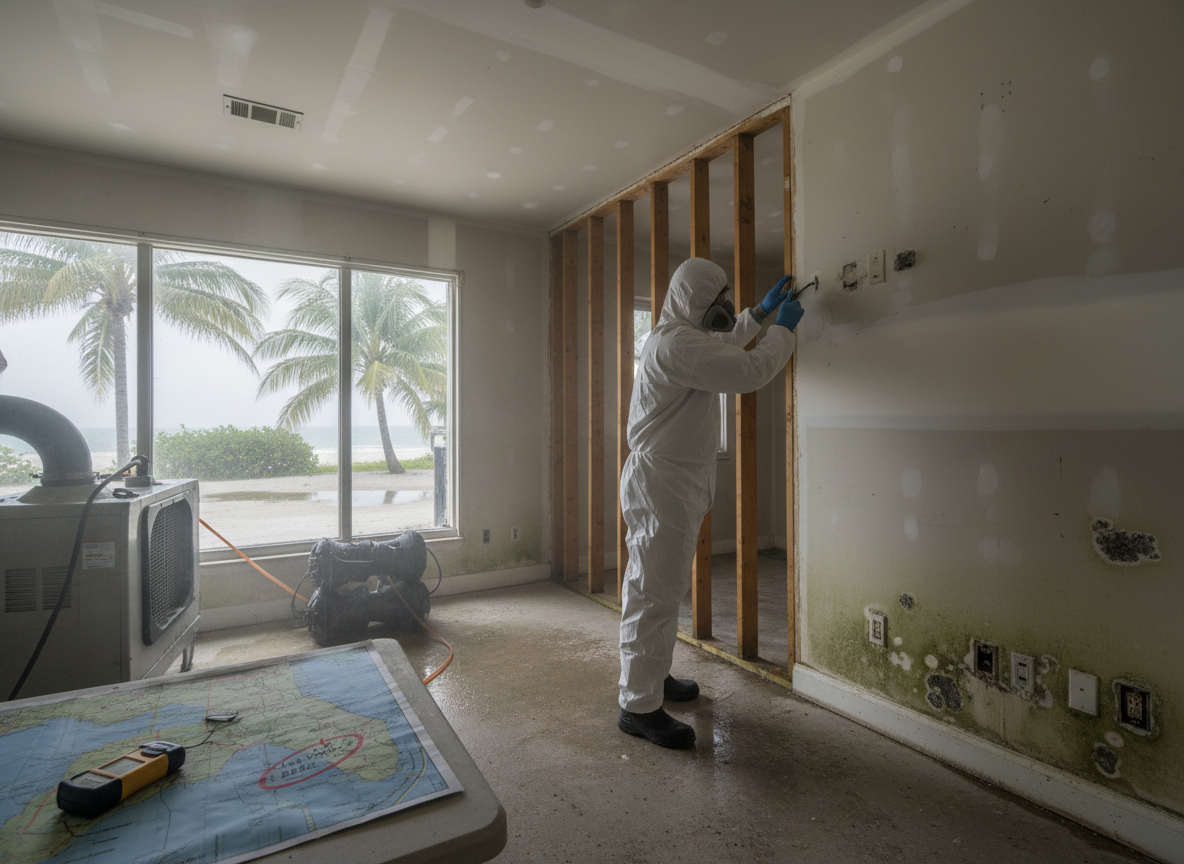
In Lake Worth Beach's tropical rainforest climate, secondary mold can develop within 24-48 hours after any water intrusion once hot humid summers raise indoor humidity above 60 percent. Older homes in Downtown, South Palm Park, and Lake Worth Shores often hold hidden moisture in plaster walls and crawl spaces that feed colonies even after visible water is gone. Palm Beach County humidity lingers through late summer and early fall, turning small leaks near Lake Worth Beach or the Lake Worth Casino Building into widespread issues if drying is incomplete.
Recognizing Hidden Moisture Sources in Local Homes
Lake Worth Beach properties built before 1980 frequently feature lath-and-plaster construction and slab-on-grade foundations that trap water after storms. Heavy summer rains combined with high humidity allow moisture to migrate from yards into South Palm Park basements and Lake Worth Shores crawl spaces. Downtown buildings near Federal Highway face added risk from aging plumbing that leaks slowly behind walls. Checking relative humidity daily with a meter and inspecting attics after each rain event reveals problems before visible mold appears. Properties close to Lantana or West Palm Beach share the same drainage patterns that push water toward foundations during peak rainy months.
Practical Steps to Limit Mold During Humid Periods
Reduce indoor humidity to 45-55 percent using dehumidifiers sized for the square footage of each room. Run exhaust fans in bathrooms and kitchens for 20-30 minutes after showers or cooking to vent moist air outside. After any water event, remove standing water within the first hour and place air movers to create cross ventilation across floors and walls. In Lake Worth Shores, clear gutters and downspouts monthly so summer downpours do not pool against foundations. Monitor wood framing and insulation for dampness using a moisture meter calibrated for local building materials rather than relying on surface feel alone.
When Professional Intervention Becomes Necessary
If moisture readings stay above 15 percent after 48 hours of drying, hidden mold likely exists behind drywall or under flooring. Mold remediation after water damage teams use HEPA filtration and containment barriers sized for the room volume to prevent spores from spreading to unaffected areas. Homes in Downtown Lake Worth often require targeted drying of historic plaster that cannot tolerate aggressive demolition. Recognizing hidden moisture in historic Lake Worth Beach homes outlines inspection points around original windows and door frames that trap condensation during humid months. Early professional assessment prevents small colonies from requiring full-room removal.
Seasonal Timing and Follow-Up Checks
Peak humidity in Palm Beach County runs from May through October, so schedule monthly moisture audits during those months even without obvious leaks. After hurricane season passes, preparing your property before hurricane season arrives recommends sealing exterior penetrations around Lake Worth Beach properties to reduce future water entry. Re-check crawl spaces in Lake Worth Shores two weeks after any drying work because residual soil moisture can re-wet framing. Keep records of humidity logs and meter readings so patterns become clear across multiple seasons.