2026-10-16 ·
Local Drainage Issues That Lead to Yard Flooding in Lake Worth Beach
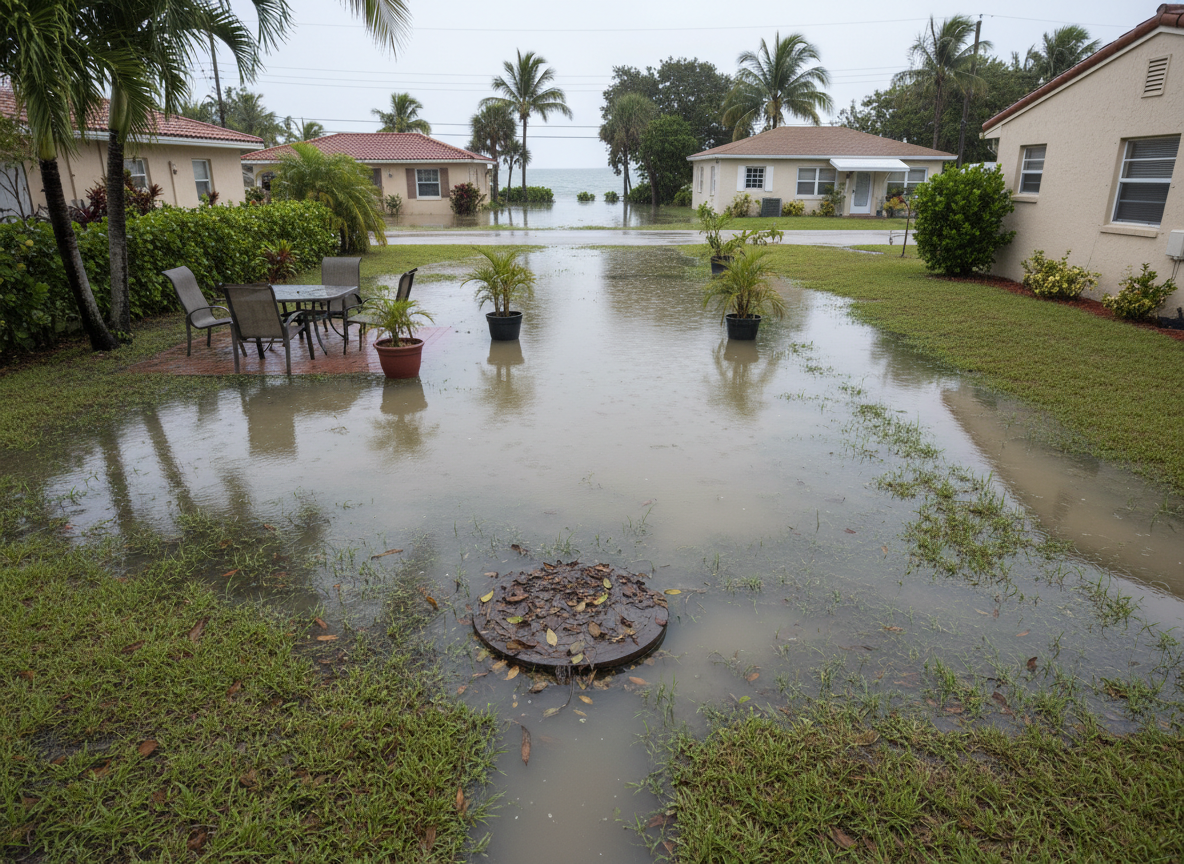
Yard flooding in Lake Worth Beach typically begins when heavy tropical rains overwhelm the flat terrain and outdated drainage systems common throughout Palm Beach County neighborhoods such as South Palm Park and Lake Worth Shores. These conditions allow water to pool for days rather than drain toward the Intracoastal or storm sewers near the Lake Worth Casino Building.
Soil Composition and Flat Terrain Effects
Lake Worth Beach sits on sandy, low-permeability soils that absorb water slowly during the hot humid summers typical of the region. When rainfall exceeds one inch per hour, as frequently occurs from May through October, the flat elevation prevents natural runoff toward Downtown Lake Worth or nearby Lantana. Homeowners in Lake Worth Shores often notice standing water along property lines because the sandy base compacts over time and creates shallow depressions. These depressions collect water that then migrates toward foundations, especially in older housing stock built before modern grading standards. The combination of high water tables and minimal slope means even moderate storms can saturate yards for 48 hours or longer, increasing risks to crawl spaces and landscaping. Residents near the Lake Worth Beach pier report similar patterns after afternoon thunderstorms because the coastal breeze pushes moisture inland without enough elevation change to move it efficiently.
Aging Stormwater Infrastructure in Downtown Areas
Many streets in Downtown Lake Worth and South Palm Park rely on drainage systems installed decades ago that were not designed for current rainfall intensity. Clogged catch basins and undersized pipes along Federal Highway frequently back up during peak summer months, forcing water into adjacent yards. In Lake Worth Shores, older concrete swales have settled unevenly, creating low spots that hold water instead of directing it toward larger canals. These infrastructure limitations become evident after repeated storms when sediment builds up and reduces flow capacity. Property owners can inspect visible grates for debris but often need professional evaluation to trace subsurface blockages that affect multiple blocks. The proximity to West Palm Beach means shared regional drainage networks sometimes experience simultaneous overload, extending recovery times for individual yards in Lake Worth Beach.
Seasonal Weather Patterns and Water Accumulation
The tropical rainforest climate delivers concentrated downpours between June and September that quickly exceed the ground's absorption rate across Palm Beach County. Afternoon storms lasting 30 to 60 minutes can drop two to four inches, leaving yards in Lake Worth Shores saturated because evaporation rates cannot keep pace with humidity levels above 80 percent. Properties near the Lake Worth Casino Building face additional challenges from wind-driven rain that pushes water against structures before it can reach drainage ditches. Over multiple seasons this repeated saturation compacts soil further and encourages root systems to block shallow French drains. Homeowners who track rainfall totals notice that yards flood more readily after the third or fourth storm in a two-week period because the water table remains elevated. These patterns differ from drier months when occasional showers dissipate without issue.
Practical Assessment Steps for Local Properties
Begin by observing your yard after a typical summer storm and noting how long water remains visible in specific low spots. Measure distances from pooling areas to the street or nearest swale in South Palm Park to identify whether grading directs flow correctly. Check downspout extensions to ensure they discharge at least five feet from the foundation rather than allowing water to recirculate near the house. In Lake Worth Shores, examine perimeter grading for slopes of at least six inches over ten feet, as flatter profiles commonly contribute to persistent moisture. Document any patterns that recur after storms and compare notes with neighbors facing similar conditions near Downtown Lake Worth. These observations help determine whether simple regrading or more extensive drainage adjustments are needed before contacting specialists for water damage mitigation.
Connecting Yard Flooding to Interior Risks
Persistent standing water in yards often leads to moisture migration under slabs or into crawl spaces, particularly in homes built on the sandy soils common throughout Lake Worth Beach. When this occurs near Lantana or along the Intracoastal, humidity levels inside can rise quickly during humid summer months, creating conditions for hidden damage. Properties in Lake Worth Shores with older plumbing sometimes experience compounding issues when exterior flooding stresses joints already weakened by age. Monitoring these connections helps residents recognize early signs before water reaches living areas. For additional guidance on seasonal preparation, review Preparing Your Property Before Hurricane Season Arrives to understand how drainage maintenance fits into broader storm readiness.